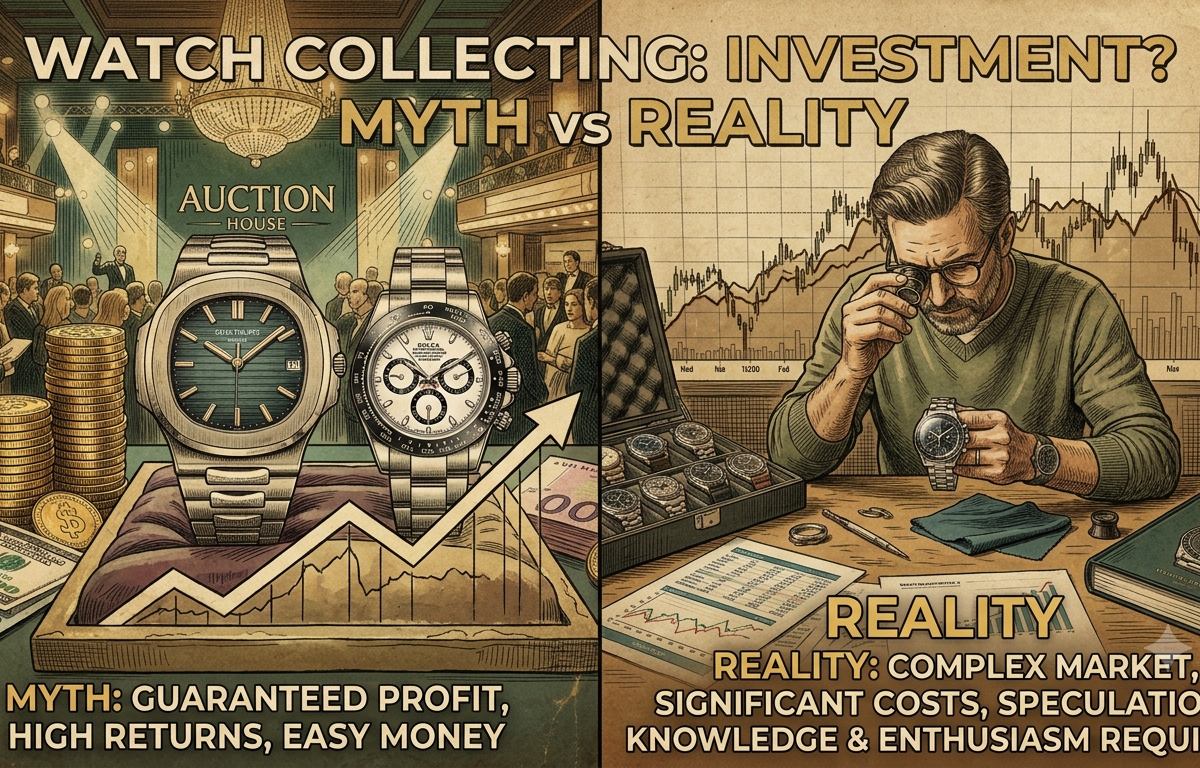
Watch collecting is often talked about as a savvy investment strategy, with stories of certain pieces doubling or tripling in value over just a few years. But is that the reality for most collectors, or just a small, highly visible exception? Let's separate myth from reality.
Myth: Most Watches Appreciate in Value
Reality: The overwhelming majority of watches, including many respected mechanical pieces, depreciate the moment they leave the store, just like a new car. Genuine, consistent appreciation is limited to a small number of specific models, usually ones with historical significance, limited production, or exceptional brand demand and even those can be unpredictable.
Myth: Any Watch Held Long Enough Will Increase in Value
Reality: Time alone doesn't create value. Plenty of watches from decades ago are worth less today, in real terms, than their original retail price, simply because there was no lasting demand or scarcity behind them. Appreciation is driven by specific, hard-to-predict factors brand reputation, design significance, rarity, and cultural relevance not simply age.
Myth: Buying Directly from a Retailer Guarantees Future Resale Value
Reality: Retail price and resale value are often disconnected. Some watches sell on the secondary market for less than retail the day after purchase, while a small number sell for significantly more due to waitlists or scarcity. There's no reliable guarantee either way, and retail price is not a meaningful predictor of future value on its own.
Myth: Watch Investing Is Passive
Reality: Unlike a simple index fund, watches require active management insurance, secure storage, periodic servicing, and market awareness. Ignoring these factors can quietly erode any potential value, and selling at the right time in the right condition, through the right channel, takes real research and effort.
What Genuinely Does Hold or Increase Value
Historically, watches that have maintained or increased in value tend to share a few traits:
Genuine historical or cultural significance
Limited production or intentional scarcity
Strong, sustained brand reputation over decades, not just a current trend
Excellent original condition, ideally with a full set of box and papers
Clear documentation and service history
Even meeting all of these criteria doesn't guarantee appreciation, since broader market trends and shifting collector tastes play a major role too.
The Honest Takeaway
If your primary goal is financial return, watches are a highly speculative, illiquid, and unpredictable vehicle compared to traditional investments, and most financial professionals would caution against treating them as a core investment strategy. That said, collecting purely for enjoyment, craftsmanship, and personal meaning with the possibility that a piece might hold or gain value over time is a very different, and generally healthier, way to approach the hobby.
The most satisfied long-term collectors tend to buy watches they genuinely love wearing first, and treat any financial upside as a pleasant bonus rather than the primary reason for the purchase.
This article is for general informational purposes only and is not financial or investment advice.