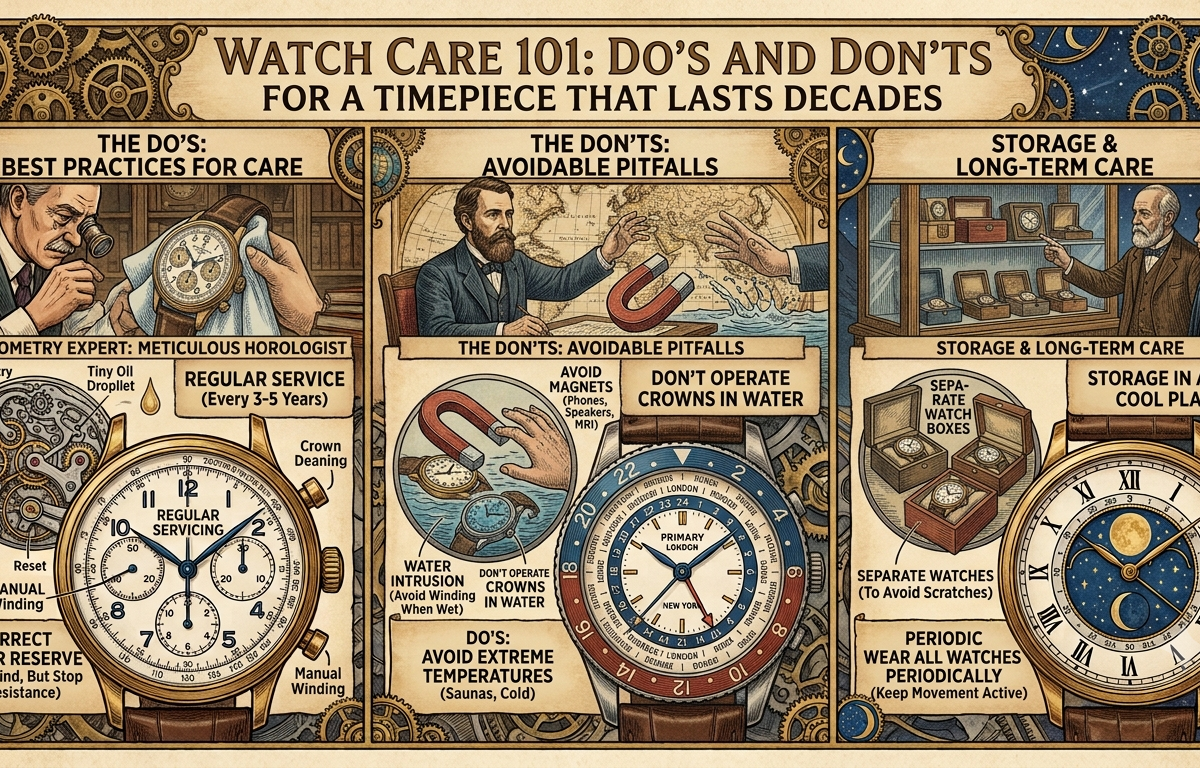
A well-made watch can genuinely last a lifetime but only if it's cared for properly. Small daily habits make a bigger difference than most people realize. Here's a practical breakdown.
Do's
Do wind and wear mechanical watches regularly. Automatics rely on wrist motion to stay powered, and manual watches need daily winding. Letting a mechanical watch sit unused for long periods isn't harmful by itself, but consistent use helps keep the lubricants distributed properly inside the movement.
Do get your mechanical watch serviced periodically. Most manufacturers recommend a full service every 4-7 years, depending on the movement. This isn't just about accuracy it's about replacing worn lubricants and gaskets before they cause internal damage.
Do wipe down your watch after wear. Sweat, dust, and skin oils accumulate on the case and strap. A simple wipe with a soft, dry cloth prevents buildup that can degrade leather straps or corrode certain metals over time.
Do know your water resistance rating and respect it. If your watch is rated for everyday splashes only, don't take it swimming. If it's rated for actual swimming or diving, make sure the crown is properly screwed down first.
Do store watches properly when not in use. A watch box, cushion, or simply a stable, padded drawer protects the case and crystal from scratches when it's not on your wrist.
Don'ts
Don't operate the crown or pushers underwater. Even on a water-resistant watch, adjusting the time or date while submerged can let water seep past the seals.
Don't expose your watch to extreme temperature swings. Sudden shifts, like going from a hot car to jumping in a cold pool, can affect gaskets and, in some cases, cause condensation inside the case.
Don't use ultrasonic cleaners or harsh chemicals at home. These can degrade seals, lubricants, and finishes. Stick to a slightly damp cloth for the case and manufacturer-approved cleaning methods for straps.
Don't ignore a watch that's running fast or slow. A small deviation is normal, but a sudden, significant change in accuracy is often an early sign something needs attention internally.
Don't assume magnets are harmless. Phones, laptop speakers, and certain bag clasps contain magnets strong enough to affect a mechanical movement, sometimes causing it to run significantly faster or slower until it's demagnetized.
A Simple Long-Term Habit
The single biggest factor in a watch's longevity isn't a fancy accessory or product it's consistency. Wearing mechanical watches regularly, wiping them down, respecting their water resistance limits, and getting them serviced on a reasonable schedule will keep almost any well-made watch running accurately for decades, and often long enough to be handed down to the next generation.