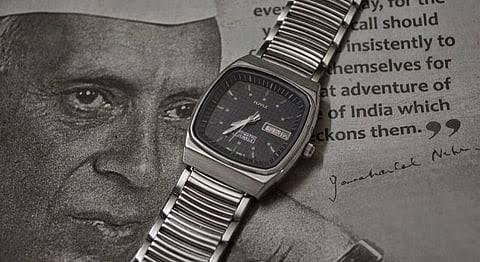
In the pantheon of Indian watchmaking, few names evoke as much nostalgia and reverence as HMT. Born from a vision of self-reliance, HMT Watches became more than timekeepers — they became heirlooms, symbols of an era, and silent witnesses to India's post-independence journey.
The Birth of a Legacy
Hindustan Machine Tools Limited (HMT) ventured into watchmaking in 1961, a bold move for a nation finding its industrial footing. In collaboration with the Japanese Citizen Watch Company, HMT set up India's first watch manufacturing unit in Bangalore. The first watch rolled out on May 1, 1961 — a moment that marked India's entry into the world of horology.
The Golden Era
Through the 1960s, 70s, and 80s, HMT watches became ubiquitous across Indian households. From the iconic Janata — a simple, robust hand-wound watch that became the working man's companion — to the elegant Pilot and the fashionable Sona, HMT offered something for every wrist.
"An HMT watch was often a family's first significant purchase — a rite of passage, a wedding gift, a retirement memento. It held time, yes, but more importantly, it held memories."
Craftsmanship That Defined an Industry
At its peak, HMT was producing over 2 million watches annually with a workforce of nearly 15,000 people. The company maintained its own tool room, designed its own movements, and manufactured its own balance staffs and mainsprings — a level of vertical integration rarely seen in the watch industry.
The Decline and Resurrection
The economic liberalization of the 1990s brought an influx of quartz watches from Japan, Switzerland, and Hong Kong. HMT, still rooted in mechanical movements, struggled to adapt. By 2016, production had ceased. But the emotional connection Indians had with HMT watches sparked a collector's movement, with vintage pieces commanding premium prices.
Why HMT Matters Today
For collectors, HMT watches represent more than nostalgia. They are a study in mid-century industrial design, a testament to India's engineering ambition, and a tangible link to a vanishing past. Each HMT watch tells a story — of a newly independent nation finding its stride, of factories humming with purpose, and of millions of Indians checking the time on wrists adorned with national pride.
Collecting HMT: A Beginner's Guide
The Janata (particularly the "Kanchan" variants) and the Pilot are excellent entry points. Look for original dials, untouched cases, and working movements. The Sona range offers elegant dress watches. Serviceability is excellent — many independent watchmakers across India still work on HMT calibers.
Whether you're a seasoned collector or a curious newcomer, an HMT watch on your wrist is a conversation starter, a piece of living history, and a tribute to Indian ingenuity.