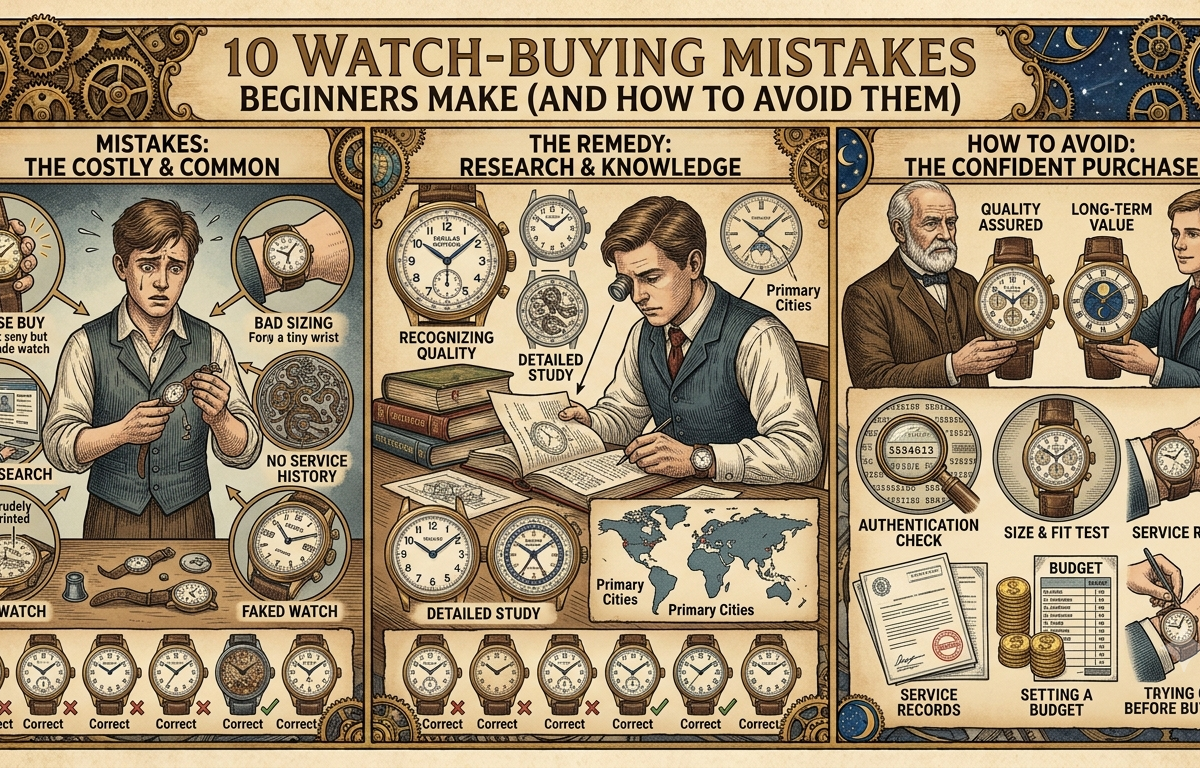
Buying your first few watches is exciting, but it's also where most people make avoidable mistakes often ones that cost money or lead to a watch sitting unworn in a drawer. Here are the ten most common ones.
1. Buying Based on Case Size Alone
A 42mm watch doesn't fit every wrist the same way. Two people with the same wrist circumference can have very different results depending on lug-to-lug length and case thickness. Always check dimensions beyond just the diameter, and try watches on in person when possible.
2. Ignoring Water Resistance Ratings
Water resistance ratings (30m, 50m, 100m, etc.) are often misunderstood. A 30m rating is generally only meant to handle splashes, not swimming or showering. Buying a watch without checking this and then damaging it is one of the most common and preventable beginner mistakes.
3. Not Researching Movement Type Before Buying
Some buyers assume a watch is automatic simply because it looks "premium," only to find out later it's quartz, or vice versa. Always confirm the movement type before purchasing, since it directly affects maintenance needs and long-term cost.
4. Overpaying for Hype Instead of Value
Certain models attract inflated resale prices due to social media trends or scarcity marketing rather than genuine mechanical or design merit. Beginners sometimes overpay chasing a "hyped" piece without understanding whether the price reflects real craftsmanship or simply demand.
5. Skipping the Return Policy Check
Especially with online purchases, always check the seller's return and warranty policy before buying. A watch that looks great in photos can feel completely different on the wrist, and a flexible return window protects you from being stuck with it.
6. Not Verifying Authenticity on the Resale Market
The secondhand and vintage watch markets can be rewarding, but they also carry a real risk of counterfeit or franken-watches (pieces assembled from mismatched parts). Buying only from reputable sellers, requesting documentation, and researching authentication basics before buying secondhand can save significant money and disappointment.
7. Underestimating Long-Term Maintenance Costs
Mechanical watches need servicing every several years, and that service isn't free. New collectors sometimes budget for the purchase price but not for the ongoing cost of keeping a mechanical watch running properly over time.
8. Buying a Watch That Doesn't Match Your Lifestyle
A rugged dive watch might be impractical for someone who works in a formal office every day, while a delicate dress watch might not survive an active outdoor lifestyle. Matching the watch to how you'll actually use it prevents buyer's remorse.
9. Forgetting About Strap and Bracelet Comfort
The dial gets all the attention, but the strap or bracelet is what touches your skin all day. A watch that looks stunning in photos can be uncomfortable if the bracelet doesn't fit well or the strap material doesn't suit your climate.
10. Buying Too Many Watches Too Quickly
It's tempting to build a collection fast, but rushing often leads to buying watches that don't get worn or that overlap too much in style and function. Slowing down and being intentional like following a framework of different watch types tends to produce a collection you'll actually enjoy for years.
The Bigger Picture
Most of these mistakes come down to the same root cause: buying quickly, based on appearance alone, without understanding the practical side of ownership. Taking a bit of time to research movement types, sizing, water resistance, and maintenance before each purchase will save both money and regret and make every watch in your collection one you're genuinely happy to wear.